Traceable input
The spent block’s original batch, recipe and treatment history, with plastic removed separately.
Explore a circular mushroom system connecting local residues, food production and carefully managed resource recovery.
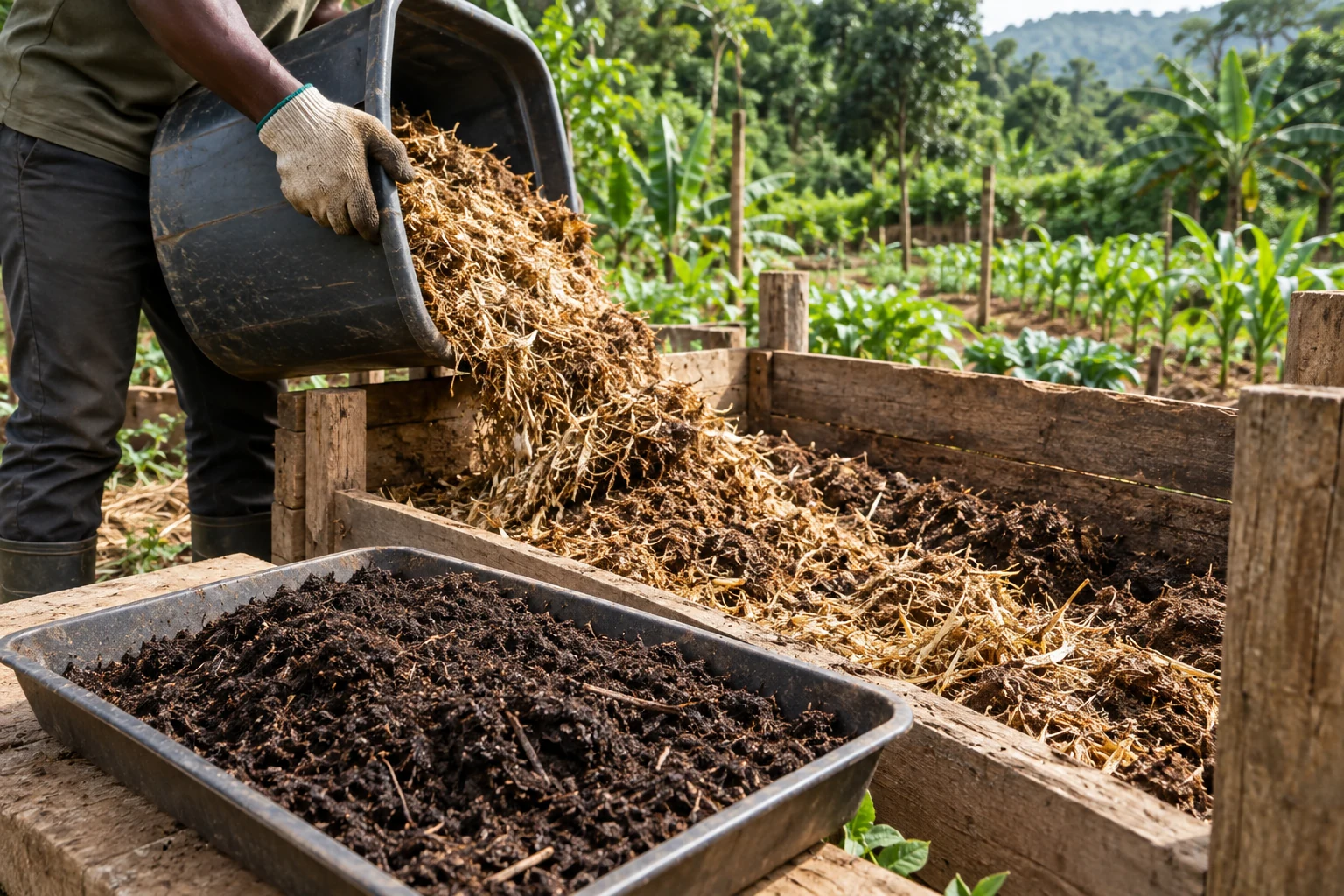
Circular mushroom farming turns sustainably sourced agricultural by-products into growing substrates. After harvest, spent substrate can be composted into organic fertiliser and soil amendments, returning nutrients to agricultural production. Black soldier fly larvae (BSFL) offer a separate recovery pathway where suitable inputs and controlled processing are available. Keep recovery work separate from food production.
Spent substrate varies by crop and treatment. Test a documented feed mix in a separate recovery trial against a suitable control. Record feed mass and moisture basis, larvae introduced, rearing time, survival and harvested biomass. Do not assume a published recipe or revenue multiplier transfers to local conditions.
Larvae intended for animal feed require suitable inputs, validated treatment, testing and confirmation of local requirements. Residual material needs appropriate treatment and testing before agricultural use. Air drying alone does not establish pathogen safety or a certified fertiliser product.
Eawag/Sandec BSF processing resources describe operating stages and training materials. Use them to structure the recovery process and its records, then validate the process for the intended use.
The spent block’s original batch, recipe and treatment history, with plastic removed separately.
A contained recovery space with a route and drainage away from food production.
Clearly identified tubs, handling tools and protective equipment for the recovery stream.
A scale, consistent sampling method and records of added water and material.
A suitable documented composting or rearing method and experienced help for a new BSFL operation.
A defined recipient, product requirements and realistic processing and testing costs.
| Control | Record | How to use it |
|---|---|---|
| Incoming material | Batch identity, condition, wet mass and supplements. | Keep unknown or unsuitable material out of the chosen recovery route. |
| Source separation | Plastic bags, ties and other non-organic materials. | Inspect before processing; screening later cannot compensate for careless input handling. |
| Trial comparison | Treatment, control, container and observation schedule. | Record deviations that prevent the treatments from being compared fairly. |
| Output measurement | Residue, biomass, collected liquid and measurement basis. | Keep mass accounting distinct from claims about safety or product value. |
| Destination | Processing, suitability checks and confirmed use. | Do not count revenue from a product that cannot meet its intended specification. |
Keep the mushroom batch, recipe, supplements and treatment history with the spent block. Separate plastic and closures. Do not mix chemically contaminated material or unknown rubbish into the recovery batch. Traceability begins with the incoming residues, before any mushrooms are grown.
Consider managed composting, an experienced external partner or a separate BSFL operation. Establish the accepted input and intended output first. Temporary storage is not completed recovery. Confirm collection frequency and how runoff and pests will be controlled while material waits.
Keep tools, drainage and traffic away from inoculation and packing. Do not return recovery tubs to a clean food worktop. Use a route that does not cross harvested mushrooms. Identify who cleans shared equipment and how it is released back into use.
For example, does a feed blend improve measured recovery against the existing blend? Set the treatment, comparison, number of containers and observation schedule in advance. Keep the question stable during the trial, and record any changes that prevent a fair comparison.
Record incoming wet mass and dry matter where feasible for conversion comparisons. Added or lost water changes wet mass without demonstrating biological conversion. Use the same sampling method for the treatment and comparison. For BSFL, identify the cohort and record survival observations and harvested biomass.
Include labour, water, collection, treatment, testing and rejected output. Decide whether the result meets its intended use before assigning a sale price. A smaller waste pile alone does not establish a safe feed or soil product, and a single trial does not establish commercial performance.
During heavy rain, inspect containment, runoff and storage access before moving spent substrate. Keep material from washing into grow-room paths or neighbouring areas. A recovery operation needs its own wet-weather drainage system rather than sharing the food-production drain by convenience.
During dry weather, record any water added to a trial and use the same measurement basis when comparing containers. Drying changes mass and handling behaviour. If transport or processing is delayed, reassess temporary storage so a recovery benefit does not become a hygiene problem.
Suppose 100 kg wet material enters a recovery batch. Recorded outputs are 65 kg residue, 8 kg harvested biomass and 7 kg collected drainage. The remaining 20 kg can include water loss, gas loss and measurement error. It cannot all be called converted feed. These figures are an accounting example, not an expected yield.
Wet-mass and dry-matter comparisons answer different questions. If input and output moisture differ, subtracting their wet weights is insufficient to calculate biological conversion. Keep the measurement basis, sampling approach and processing method alongside any recovery percentage, and retain results that did not work as well as those that did.
| Observation | Investigate | Next action |
|---|---|---|
| Persistent odour or runoff | Overwet storage, unsuitable inputs and process control. | Contain the material and review the method before adding more. |
| Pests near the grow room | Storage duration, uncovered material and shared routes. | Improve containment and move recovery away from food zones. |
| Variable BSFL recovery | Feed mix, moisture basis, cohort and rearing conditions. | Compare trial records and seek experienced support rather than guessing. |
| No buyer or approved use for output | Product requirements, processing and confirmed demand. | Do not count speculative revenue; evaluate a different route. |
| Plastic remains in recovered material | Bag removal, screening and work sequence. | Improve source separation and exclude contaminated output from the intended use. |
| Recovery costs exceed its benefit | Labour, transport, processing and avoided disposal costs. | Review the full cost and test a smaller or external route. |
Reviewed 10 October 2026. Follow the instructions for your actual species, strain and equipment. Worked calculations are teaching examples, not measured ICL results.
Further reading on cultivation methods, crop management and farm operations.