Batch template
An editable copy of the CSV with clear units and one stable ID per production batch.
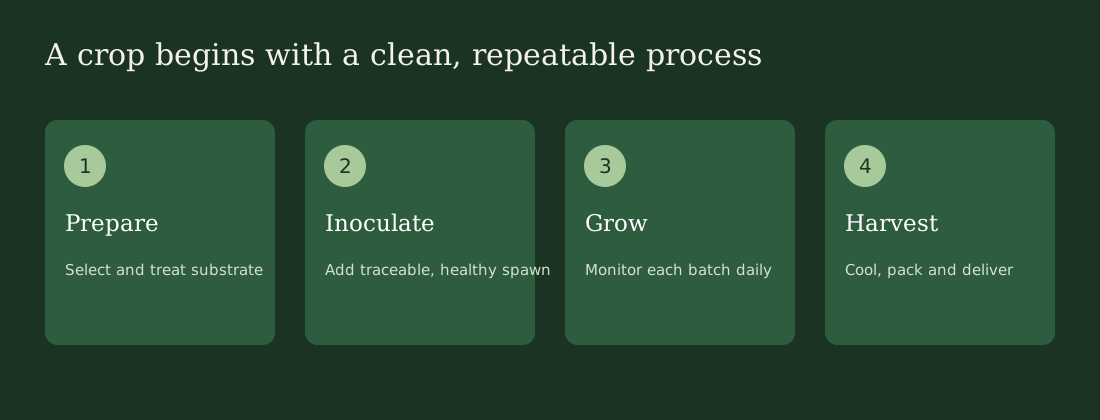
Simple records turn a good harvest into a process you can repeat.
Enter your batch figures in Tanzanian shillings. The calculator shows revenue, contribution after entered costs and break-even price. Include tax, finance and depreciation in your costs where applicable.
Strain, substrate and conditions affect timing. Track each batch; crop readiness is more useful than a promised date.
No. Use clean, suitable material with a known source. Each recipe needs treatment validation and a small trial.
No. Appearance cannot establish safety or culture identity. Use reliable spawn, documented hygiene and a response procedure.
Contact ICL to confirm current availability, delivery area and training options. Supply and bookings need separate confirmation.
ICL Learn brings together practical cultivation workflows, operating checklists and technical references. Use batch records to track how your strain, materials and growing conditions affect results.
An editable copy of the CSV with clear units and one stable ID per production batch.
A printed or offline-accessible routine for climate, hygiene, harvest and equipment checks.
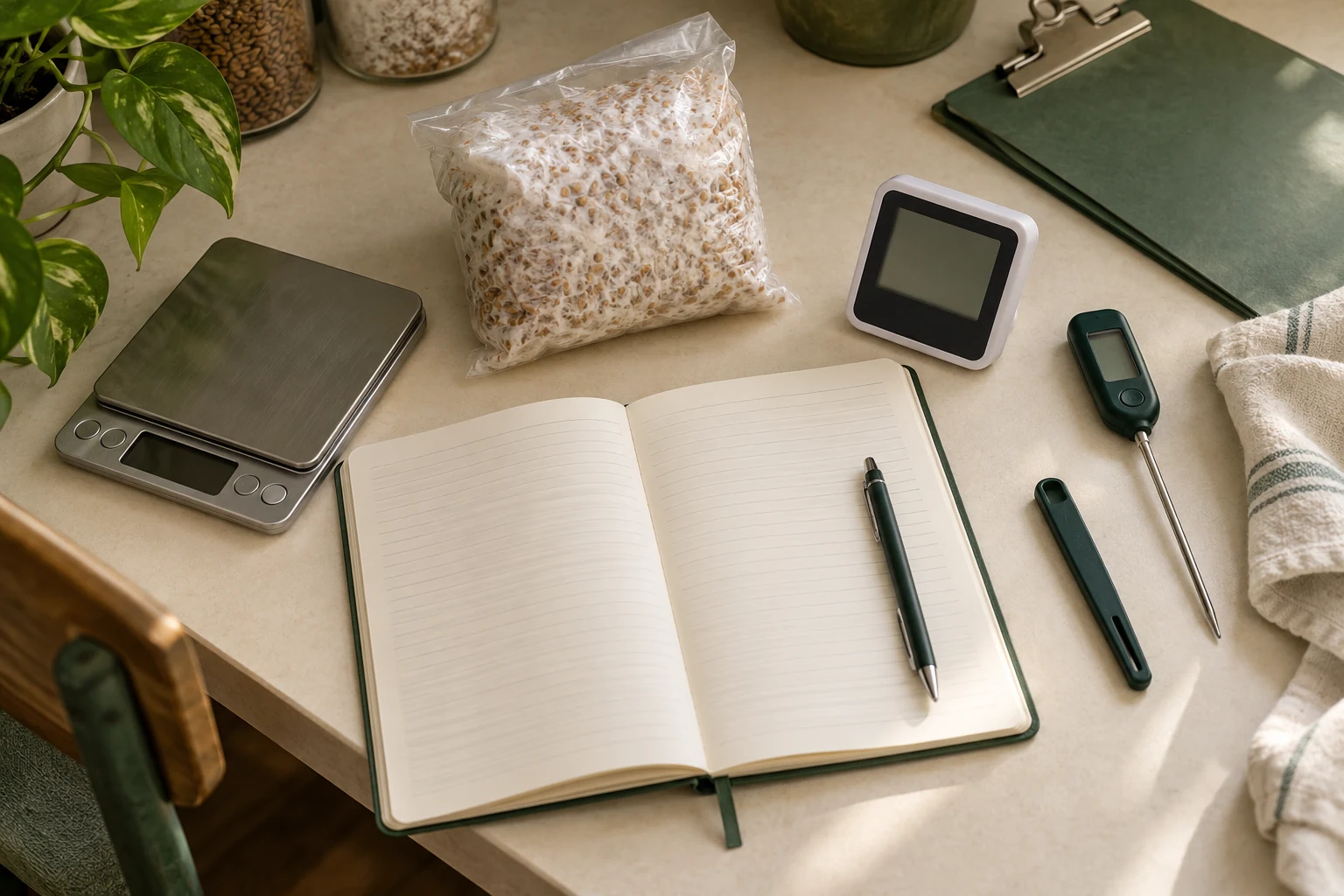
Suitable scales, room sensors and a probe thermometer with identified positions or uses.
A way to record outages, process deviations and changes at the time they occur.
Purchase, delivery, invoice and payment records linked to the correct batch or customer.
A retained master and a dated backup so a corrupted or overwritten file does not erase the history.
| Control | Record | How to use it |
|---|---|---|
| Identity | Batch, recipe version, spawn lot and operator. | Use the same identifiers in the bag label, room map and harvest entry. |
| Units | Mass, time, temperature and money with clear headings. | Separate grams from kilograms and wet mass from dry mass. |
| Completeness | Bags started, rejects, harvests, sales and costs. | Leave a visible missing value rather than silently treating it as zero. |
| Corrections | Original value, revised value and reason. | Keep a note when a measurement or assumption changes. |
| Decisions | Evidence, next action and the comparison planned. | A useful record ends with a specific repeat, change or hold decision. |
Use the same ID on the recipe record, bags, rack map and harvest entries. A format such as 2026-10-10-A is only an example; choose a system that stays unique with several operators. Keep customer orders linked to the batch that supplied them.
Enter ingredient weights, spawn lot, treatment record and bag count before memory fades. Note interruptions and uncertain readings. Blank or “not measured” is more informative than invented precision. Keep the temperature record with the batch rather than summarising an incomplete process as “done”.
Use consistent observation times and sensor positions. Record crop stage and changes to misting, airflow or spacing. A reading without time and location is difficult to compare. Keep corrective actions and their follow-up together so the log explains what the operator actually did.
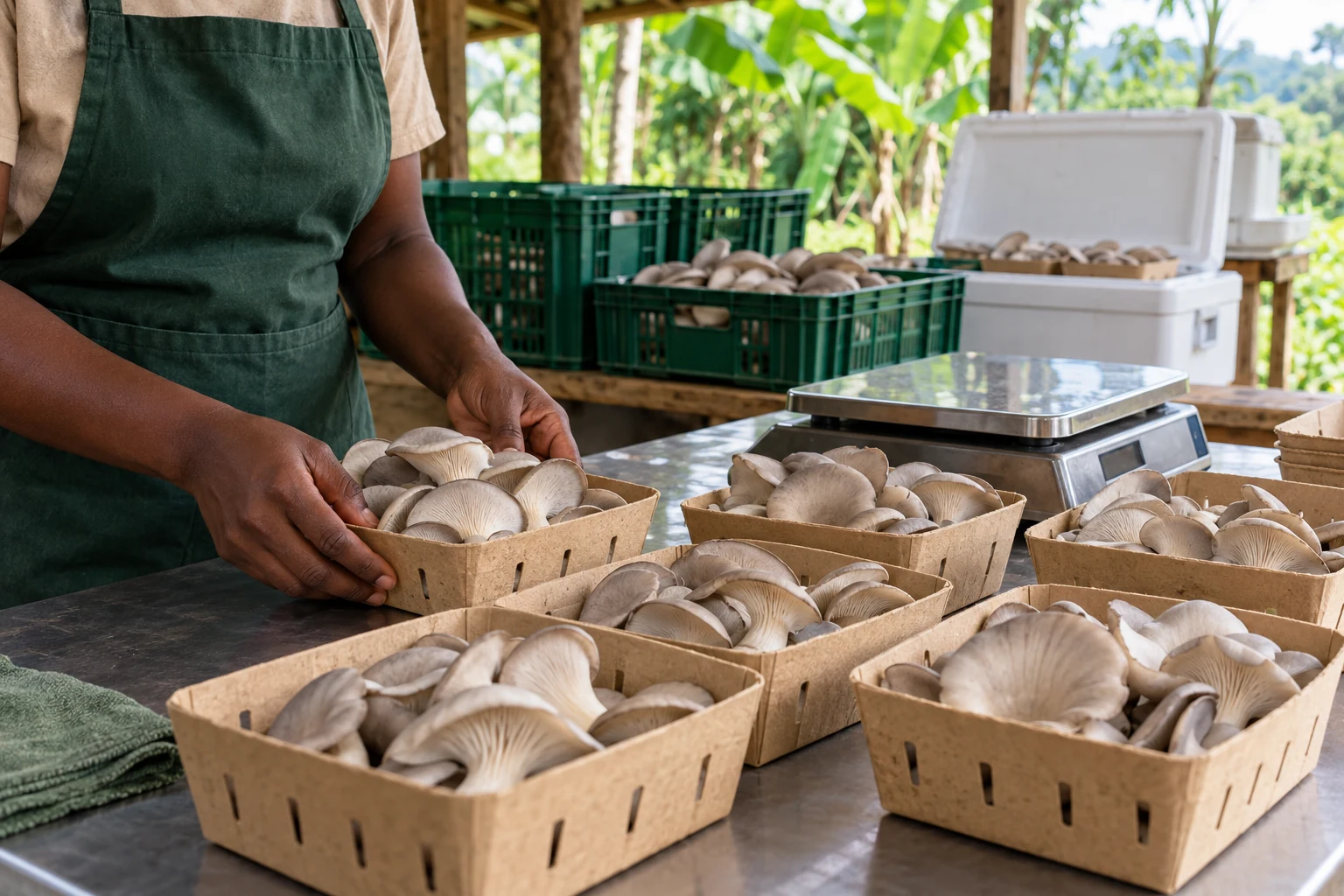
Enter harvest dates and keep total, rejected and saleable weights distinct. If harvests exceed the three flush columns in the CSV, add columns or linked harvest rows instead of overwriting earlier values. Label containers at weighing so harvests from different batches are not mixed accidentally.
Connect sales and entered costs to the batch. Keep invoices separate from cash received and use a consistent method for shared overheads. The calculator reflects the costs you enter; it cannot discover omitted labour, cooling, transport or equipment costs.
At batch close, choose one change or decide to repeat the method. Record why and what comparison you will use. Keep a backed-up master copy with original measurements so another operator can understand the decision and a later trial can be compared fairly.
For paper records, write legibly and transfer entries to the master copy on a set schedule. Retain the paper until the transfer has been checked. Photographing a page can preserve a backup, but it does not automatically create searchable or consistent data.
For spreadsheets, keep an untouched blank template and use a working copy. Add units to any new columns and keep formulas separate from entered measurements. If a summary looks implausible, trace the original rows and units before changing the number to fit expectations.
Biological efficiency = fresh mushroom mass ÷ dry substrate mass × 100. For example, 12 kg fresh harvest from 20 kg dry substrate is 60%. Bag rejection rate = rejected bags ÷ bags started × 100; four rejected bags out of forty is 10%. These are calculation examples rather than target performance.
Keep grams and kilograms in separate clearly labelled columns, and state whether a mass is wet or dry. The downloaded CSV is an empty working template, not production data. Add one row per batch, retain the original file, and save a working copy. The daily checklist is plain text for easy printing or adaptation.
The calculator above assumes the entered saleable harvest is sold at the entered price. Contribution after entered costs is distinct from net profit. Break-even cost per kilogram rises if less can be sold, even if the crop’s total harvested weight is unchanged.
| Observation | Investigate | Next action |
|---|---|---|
| A harvest entry has no batch ID | Which recipe and spawn lot produced it. | Label harvest containers and enter the ID during weighing. |
| Only healthy bags were counted | Process losses and rejection rate. | Record started, rejected and remaining bags and reconcile the counts. |
| Dry-substrate mass is missing | Biological efficiency cannot be calculated reliably. | Keep dry-recipe records; do not substitute wet bag mass. |
| Costs are estimated after the batch | Missed labour and repeated small purchases. | Retain receipts and log time during each work session. |
| Totals disagree | Double-counting, unit errors and missing rejects. | Trace original rows before changing the summary. |
| A correction has no explanation | Whether a measurement or assumption changed. | Retain the original value and explain the correction in notes. |
Reviewed 10 October 2026. Follow the instructions for your actual species, strain and equipment. Worked calculations are teaching examples, not measured ICL results.
Further reading on cultivation methods, crop management and farm operations.