Hot, dry weather
Shade the roof, check water reserves and inspect pins for drying. Ventilation alone cannot cool below outside air temperature.
Manage heat, humidity and fresh air together. A coastal grow room needs observation before automation.
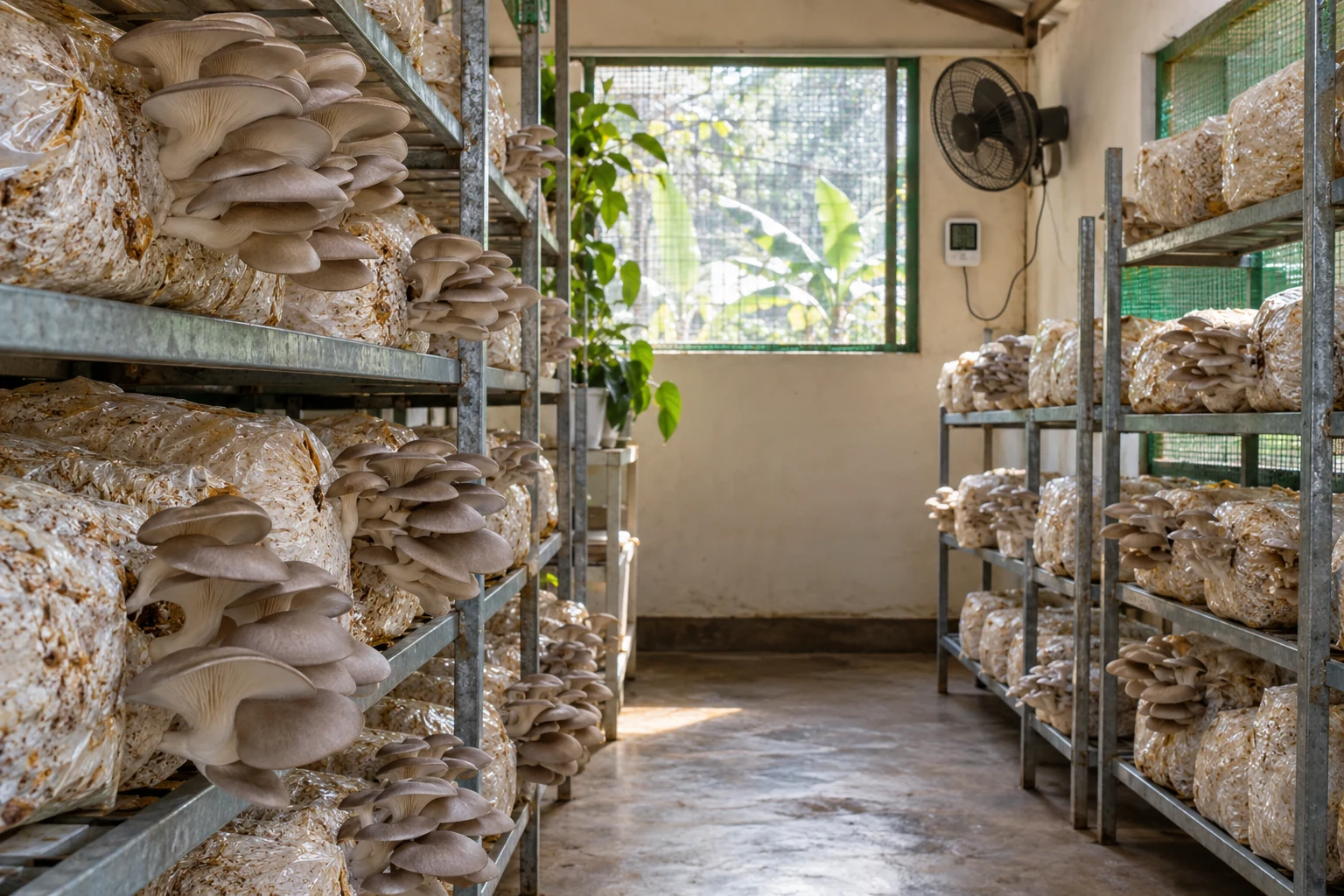
There is no single temperature setting for all oyster mushrooms. Obtain incubation and fruiting ranges from your spawn supplier. Warm-tolerant oyster strains may suit the coast better than cool-weather strains. Measure the room at its hottest time before choosing the crop.
Shade the roof, check water reserves and inspect pins for drying. Ventilation alone cannot cool below outside air temperature.
Reduce unnecessary misting, clear drainage and inspect wet surfaces. Keep stored residues dry and raised above the floor.
Check night temperatures and match the strain. Protect against cold drafts while maintaining fresh air.
Keep a manual thermometer, clean reserve water and a ventilation routine. Record the interruption and inspect the crop before resuming the usual schedule. Avoid sealing a hot grow room to preserve humidity.
Temperature and humidity instruments positioned at crop level, with a written location for each.
A suitable probe thermometer for representative incubating bags, used with a consistent clean procedure.
Screened inlets, an accessible exhaust route and fans that can be inspected safely.
A cleanable reservoir, serviceable filters and nozzles, with a known reserve-water supply.
A readable thermometer and an outage procedure available without phone or internet access.
Room log, rack map and crop-stage notes kept together rather than in separate unlinked messages.
| Control | Record | How to use it |
|---|---|---|
| Air temperature | Read at recorded rack positions and times. | Compare with the actual strain and stage requirements, including the afternoon maximum. |
| Bag temperature | Check representative bags during incubation. | Crop heat can differ from room air; review spacing and loading if the pattern changes. |
| Relative humidity | Measure away from direct spray and interpret beside crop observations. | Look for dry pins and persistent cap wetness; one displayed percentage does not explain both. |
| Air movement | Check inlets, obstructions and distribution. | Record fan changes and compare sheltered corners with positions exposed to drafts. |
| Light and surfaces | Observe diffuse light, condensation and drainage. | Keep direct sun off crop and sensors; log wet areas that persist between rounds. |
Obtain separate incubation and fruiting instructions from the spawn supplier. Put the intended ranges and the actions for going outside them on the room log. A coastal weather description cannot substitute for a measurement beside the crop. Choose the strain before promising a growing schedule.
Compare upper and lower rack levels, the inlet and the far end. Take readings at consistent times, including the warm afternoon. Mark sensor positions so later readings refer to the same place. Keep instruments away from direct sunlight and spray; record crop stage and rack loading.
Compare instruments side by side and follow their manufacturers’ checking procedure. A permanently saturated or implausibly fixed reading needs investigation. Keep a manual thermometer available so one failed sensor does not remove the only measurement. Record the device and position if you replace a sensor.
Inspect pin development, cap surfaces, condensation, drainage and airflow. Write what has changed since the previous round. A high humidity reading does not establish that a cluster in a direct draft is adequately protected. Surface wetness and air humidity are different observations.
For drying, investigate airflow and moisture together; for persistently wet caps, check spray direction, timing and drainage. Change one control at a time where possible, note the time and recheck. Avoid responding to every symptom by increasing mist across the whole room.
Examine minimum and maximum readings rather than only a comfortable morning value. Record outages, water interruptions and crowded racks. Use repeated patterns to decide whether shading, air distribution, water delivery or a different strain is the next useful improvement.
For a humid coastal or rainy-season room, inspect persistent wet surfaces and drainage before adding mist. Keep stored residues and the clean work area protected from humid outdoor traffic. The room may need fresh-air distribution even when relative humidity is already high.
For a hot dry spell or a cooler inland night, compare actual room trends with the strain specification. A direct draft can dry one rack while another stays humid. Recheck sensors and local air paths before making a room-wide correction, and note the conditions under which the change helped.
Use one row per observation: date, time, room, rack level, air temperature, relative humidity, representative bag temperature when relevant, crop stage, equipment status, action and follow-up. Write “not measured” rather than guessing a missing reading. Incubating bags and exposed fruiting clusters require separate interpretation.
For example, if only the upper rack develops dry pins after a ventilation change, compare its air movement and readings with the lower rack before adding more water everywhere. This is an investigation pattern, not a diagnosis. Record the change and what the next observation showed. Download the daily checklist →
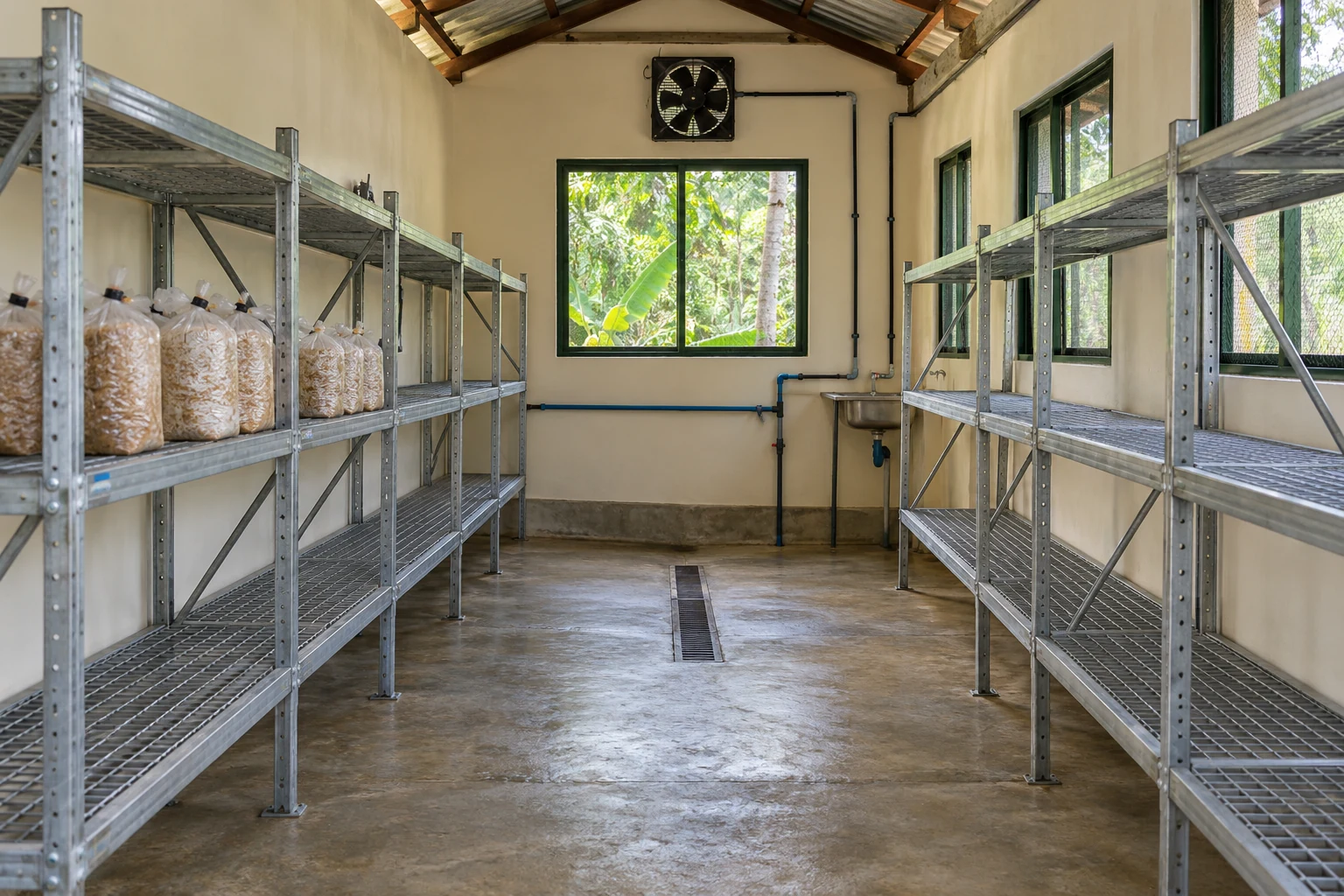
| Observation | Investigate | Next action |
|---|---|---|
| Long stems and small caps | Fresh-air restriction; strain and lighting can also affect form. | Check screened inlets, fan operation and the supplier’s requirements. |
| Dry or stalled pins | Drafts, heat, inadequate humidity or a drying block. | Inspect at crop level and compare positions before increasing mist everywhere. |
| Caps remain wet | Direct spray, condensation, long mist cycles or poor drainage. | Review spray direction and timing and remove persistent pools. |
| Upper racks run warmer | Heat accumulation, dense loading and air distribution. | Compare rack readings and spacing without blowing directly on pins. |
| Sensor never changes | Wet sensor, battery, placement or device failure. | Compare with another instrument and service or replace it. |
| Room heats during an outage | Loss of powered ventilation or cooling. | Use the planned manual response, inspect the crop and record the interruption. |
Reviewed 10 October 2026. Follow the instructions for your actual species, strain and equipment. Worked calculations are teaching examples, not measured ICL results.
Further reading on cultivation methods, crop management and farm operations.